What Are Superabrasive Grinding Wheels?
Superabrasive grinding wheels are advanced abrasive tools that utilize ultra-hard materials—primarily diamond and cubic boron nitride (CBN)—as their cutting agents. These tools are engineered to grind materials that are too hard, brittle, or wear-resistant for conventional aluminum oxide or silicon carbide wheels.

Precision Superabrasive Technology
Advanced grinding solutions for hard materials with exceptional performance and durability
Core Advantages
- Extreme Hardness: Diamond and CBN are the hardest known materials
- Exceptional Wear Resistance: Lifespan 100-1000x longer than conventional wheels
- High Efficiency: Faster material removal with superior surface finish
- Thermal Stability: CBN withstands temperatures up to 1400°C
- Precision Grinding: Achieves tight tolerances and excellent surface quality
- Cost-Effective: Lower cost per part despite higher initial investment
- Versatile Applications: Suitable for wide range of hard materials including carbide, ceramics, hardened steel, and composites
Components of Superabrasive Grinding Wheels
Superabrasive grinding wheels are sophisticated composite tools consisting of three primary components working in synergy to deliver exceptional performance:
1. Superabrasive Grains
The cutting elements made of synthetic diamond or CBN particles. Grain size, concentration, and strength determine cutting performance and surface finish.
2. Bond Matrix
The material that holds abrasive grains together and provides structural integrity. Bond type determines wheel hardness, self-sharpening ability, and application suitability.
3. Core Structure
Provides mechanical support and mounting interface. Typically aluminum or steel ensuring stability and safety during high-speed operation.
Classification by Abrasive Type
Selecting the correct abrasive type is critical for optimal performance and tool life. The choice depends primarily on the workpiece material.
Diamond Grinding Wheels
- For Non-Ferrous Materials: Aluminum, copper, brass, and their alloys
- For Carbides: Tungsten carbide, titanium carbide
- For Ceramics & Glass: Alumina, zirconia, silicon carbide, glass
- For Stones & Composites: Granite, marble, engineered stone, CFRP
- For Semiconductor Materials: Silicon, sapphire, gallium arsenide
Note: Diamond reacts with iron at high temperatures, so it’s not recommended for steel grinding.
CBN Grinding Wheels
- For Hardened Steels: Tool steels, die steels (>45 HRC)
- For High-Speed Steels: M2, M42, T15 and other HSS grades
- For Cast Irons: Gray iron, ductile iron, malleable iron
- For Superalloys: Inconel, Hastelloy, Waspaloy
- For Powder Metals: Sintered steels and alloys
Note: CBN is chemically inert to iron, making it ideal for ferrous materials.
Classification by Bond Type
The bond material determines the grinding characteristics, application suitability, and overall performance of the wheel. Four main bond types are available:
Resin Bond
Characteristics: Excellent for fine finishing, cool cutting, and complex profiles. Provides good elasticity and polishing action.
Applications: Carbide tool grinding, fine finishing, complex contour grinding.
- Excellent vibration damping
- Good elasticity and polishing action
- Cool cutting characteristics
Vitrified/Ceramic Bond
Characteristics: High precision, thermal stability, and consistent performance. Ideal for high-speed and precision grinding.
Applications: High-speed grinding, precision form grinding, mass production.
- High thermal stability
- Excellent dimensional accuracy
- Controlled porosity for coolant flow
Electroplated Bond
Characteristics: Extremely sharp, free-cutting action for complex forms. Single layer construction with excellent form accuracy.
Applications: Complex profile grinding, small batch production, PCD/PCBN tool grinding.
- Single layer of abrasive
- No dressing required
- Excellent form accuracy
Metal Bond
Characteristics: Maximum durability for aggressive grinding of hard materials. Excellent for long production runs.
Applications: Stone processing, glass cutting, ceramic grinding, long-run production.
- High durability and wear resistance
- Suitable for wet and dry grinding
- Longest wheel life
Industry Applications & Uses

Precision Grinding Solutions
Superabrasive wheels serve critical roles across multiple industries where precision, efficiency, and quality are paramount
Tool Grinding & Sharpening
- Carbide cutting tool grinding
- High-speed steel tool sharpening
- PCD/PCBN tool manufacturing
- Drill bit grinding and sharpening
- End mill manufacturing
- Tool reconditioning services
Aerospace Industry
- Turbine blade grinding
- Engine component machining
- Landing gear components
- Titanium & nickel alloy parts
- Composite materials
- Aircraft structural components
Automotive Manufacturing
- Camshaft & crankshaft grinding
- Transmission gear machining
- Brake system components
- Engine valve production
- Piston manufacturing
- Fuel injection parts
Tool & Die Making
- Precision mold making
- Die manufacturing
- Gauge & fixture production
- Die & mold maintenance
- Stamping tool production
- Forming tool manufacturing
Electronics & Semiconductor
- Silicon wafer processing
- LED substrate grinding
- Ceramic package machining
- Optical component finishing
- Circuit board processing
- Display glass cutting
Medical Device Manufacturing
- Surgical instrument grinding
- Orthopedic implant finishing
- Dental tool manufacturing
- Medical component precision grinding
- Prosthetic device production
- Medical implant surface finishing
Energy & Power Generation
- Wind turbine components
- Nuclear valve parts
- Gas turbine blades
- Hydroelectric components
- Power transmission parts
- Energy storage components
Other Specialized Applications
- Stone and concrete processing
- Glass and optics manufacturing
- Ceramic component production
- Composite material machining
- Research and development
- Custom tool manufacturing
More applications available – Contact us for detailed consultation about your specific grinding requirements!
Compatible Grinding Machines
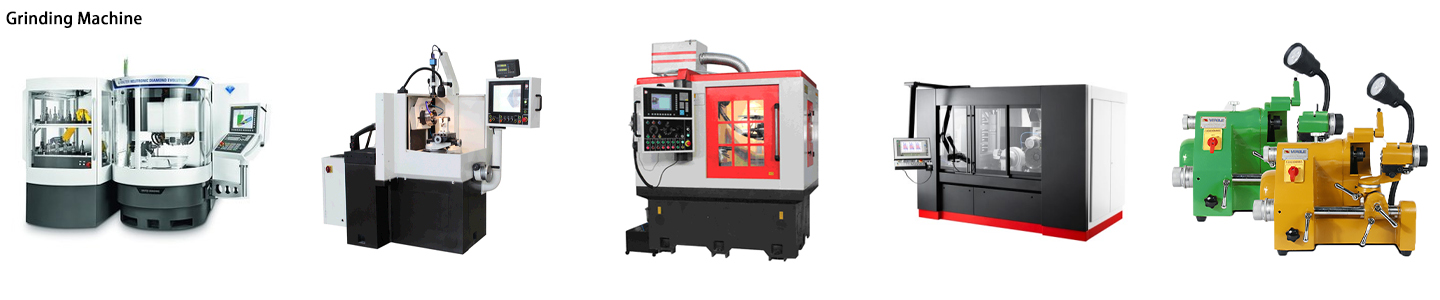
Modern Grinding Equipment
Superabrasive wheels are designed to work with various grinding machine types for optimal performance
Machine Compatibility & Requirements
Superabrasive grinding wheels are compatible with a wide range of grinding machines, from traditional manual machines to advanced CNC systems. Proper machine selection ensures optimal wheel performance and longevity.
Key Machine Requirements:
Rigidity & Stability
Machines must have sufficient rigidity to handle the cutting forces of superabrasive wheels without vibration or deflection. High-precision spindles and solid construction are essential for optimal performance.
Spindle Speed
Compatible with various spindle speeds, from traditional 1,800-3,600 RPM to high-speed applications up to 12,000 RPM. Proper speed selection depends on wheel diameter, bond type, and application requirements.
Coolant Systems
Effective coolant delivery is essential for heat dissipation and chip removal in superabrasive grinding operations. High-pressure coolant systems (up to 1000 psi) are recommended for optimal performance.
Dressing Capability
Machines should have appropriate dressing equipment for maintaining wheel form and sharpness. CNC dressing systems, diamond dressing rolls, or laser dressing technology may be required depending on the application.
Compatible Machine Types:
- Surface Grinders: For flat surfaces and slots – Use resin or vitrified bond wheels with appropriate grit sizes. Ideal for precision flat grinding and slotting operations.
- Cylindrical Grinders: For shafts and cylinders – Vitrified CBN preferred for steel, diamond for non-ferrous materials. Includes universal, plain, and centerless cylindrical grinders.
- Tool & Cutter Grinders: For cutting tools – Diamond wheels essential for carbide tools, CBN for steel tools. Includes CNC tool grinders for complex tool geometries.
- Creep Feed Grinders: For deep cuts – High concentration wheels with open structure and effective coolant. Designed for high material removal rates in single pass operations.
- CNC Grinding Centers: For automated precision – All bond types applicable based on material and requirements. Multi-axis CNC systems for complex geometries and high-volume production.
- Specialized Machines: For glass, semiconductor, optics industries – Customized diamond wheels with specific bonds and forms. Includes dicing saws, wafer grinders, and optical grinding machines.
- Internal Grinders: For internal diameter grinding – Small diameter wheels with appropriate bonds for precision internal grinding applications.
- Profile Grinders: For complex profiles – Electroplated or formed wheels for precision profile grinding of complex shapes and contours.
Advantages Over Conventional Grinding Wheels
Performance Comparison
| Performance Factor |
Superabrasive Wheels |
Conventional Wheels |
| Hardness |
Extreme (Diamond: 10,000 HV; CBN: 4,500 HV) |
Moderate (AlOx: 2,000 HV; SiC: 2,500 HV) |
| Tool Life |
100-1000x longer, reducing downtime |
Frequent dressing & replacement needed |
| Material Removal Rate |
2-5x higher, improving productivity |
Limited by wheel wear and thermal issues |
| Grinding Forces |
Lower, reducing part distortion |
Higher, causing potential deflection |
| Surface Finish |
Superior (lower Ra values, better integrity) |
Adequate but not for precision applications |
| Heat Generation |
Lower, reducing thermal damage |
Higher, risk of burn marks |
| Operating Cost |
Lower per-part cost despite higher initial investment |
Higher per-part cost due to frequent changes |
| Consistency |
Highly consistent performance throughout wheel life |
Performance degrades as wheel wears |
| Precision |
High dimensional accuracy and repeatability |
Limited precision capability |
| Material Compatibility |
Can grind ultra-hard materials (carbide, ceramic, hardened steel) |
Limited to softer materials |
Economic Benefits
While superabrasive wheels have higher initial costs, they provide significant long-term savings across multiple dimensions:
- Reduced Downtime: Fewer wheel changes increase machine utilization and production capacity. Typical downtime reduction of 60-80% compared to conventional wheels.
- Lower Labor Costs: Less time spent on wheel dressing, replacement, and machine setup. Operators can focus on productive work rather than maintenance tasks.
- Higher Productivity: Faster material removal reduces cycle times and increases throughput. Typical productivity improvement of 30-50% in comparable applications.
- Improved Quality: Better surface finish and dimensional accuracy reduce scrap rates and rework. Consistent quality throughout the wheel life ensures predictable manufacturing outcomes.
- Consistent Performance: Stable grinding parameters throughout wheel life ensure predictable results. Reduced process variability improves overall manufacturing reliability.
- Energy Efficiency: Lower grinding forces reduce power consumption and machine wear. Typical energy savings of 15-25% compared to conventional grinding operations.
- Reduced Coolant Consumption: Efficient grinding reduces heat generation and coolant requirements. Environmental benefits through reduced fluid consumption and disposal costs.
- Long-term Cost Savings: Despite higher initial investment, total cost of ownership is typically 40-60% lower than conventional wheels over the life of the tool.
Return on Investment Analysis
Most customers achieve full ROI within 3-6 months of switching to superabrasive wheels. The exact timeframe depends on production volume, material hardness, and specific application requirements. Contact us for a personalized ROI analysis based on your production parameters.
How to Select the Right Superabrasive Wheel
1 Choose Abrasive Type
- Diamond: For non-ferrous metals, carbides, ceramics, glass, stone, composites
- CBN: For ferrous materials, hardened steels, tool steels, cast irons, superalloys
Selection Tip: Match abrasive to workpiece material; diamond for non-ferrous, CBN for ferrous.
2 Select Bond Type
- Resin Bond: Fine finishing, cool cutting, complex profiles
- Vitrified Bond: High precision, thermal stability, consistency
- Metal Bond: Maximum durability, aggressive grinding
- Electroplated Bond: Complex forms, free-cutting, no dressing
Selection Tip: Consider application requirements: precision, surface finish, material removal rate.
3 Determine Specifications
- Grit Size: Coarse (46-120) for stock removal, Medium (120-320) for general, Fine (200-2000+) for finishing
- Concentration: Low (25-50%) for soft materials, Medium (75-100%) for general, High (125-150%) for hard materials
- Grade: Softer grade for hard materials, Harder grade for soft materials
Selection Tip: Harder workpiece = softer grade wheel; softer workpiece = harder grade wheel.
4 Consider Application Factors
- Material type, hardness, and thermal properties
- Required surface finish (Ra value) and tolerances
- Stock removal rate and production volume
- Machine capabilities, rigidity, and spindle speed
- Coolant availability and type (wet vs. dry)
- Wheel mounting method and machine interface
Selection Tip: Document all application details for accurate wheel selection.
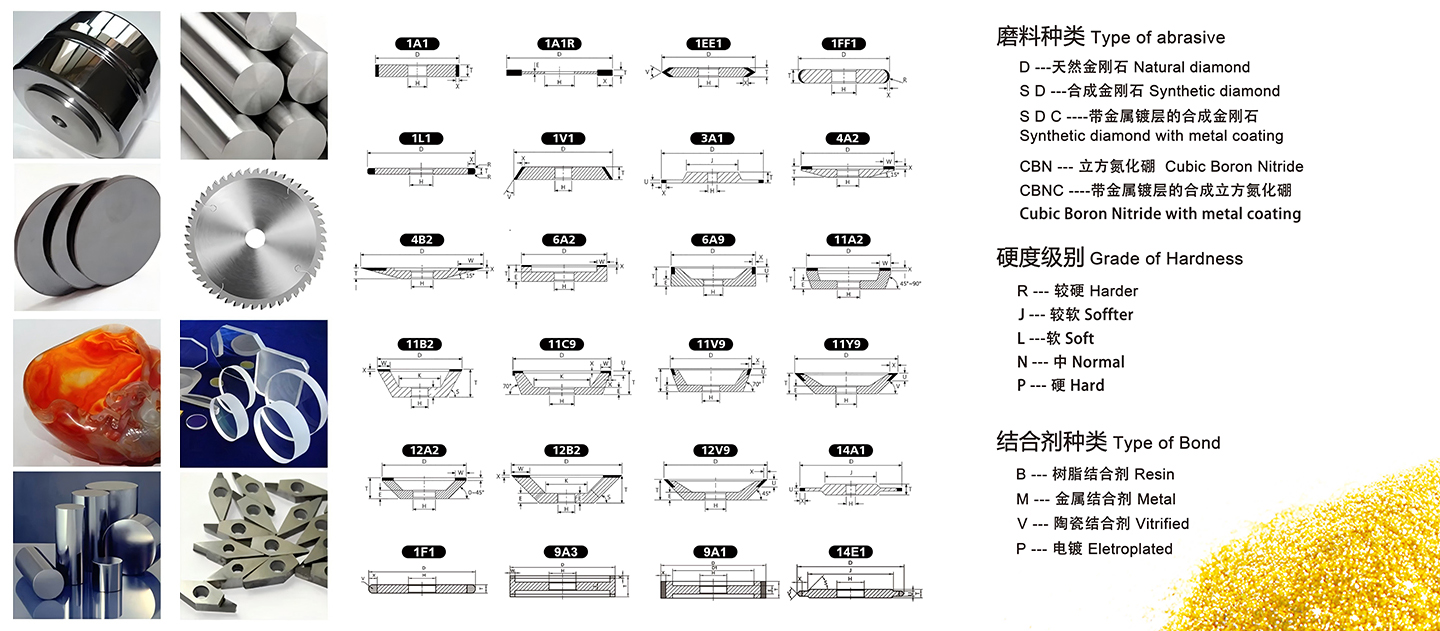
Custom Solutions Available
We offer custom-designed wheels for specialized applications and unique requirements
Custom Grinding Wheel Ordering Process
Step 1: Provide Detailed Requirements
Submit your grinding wheel specifications including detailed drawings or provide wheel model, dimensions, workpiece information, machine details, and any special requirements. Clear specifications help us provide accurate solutions.
Step 2: Engineering Review & Quotation
Our engineers will review your wheel information and typically provide detailed drawings and pricing. We analyze application requirements and recommend optimal solutions based on our technical expertise.
Step 3: Customer Confirmation & Payment
Review and confirm the wheel information and pricing. Proceed with payment as agreed (TT/PayPal). Production begins immediately upon receipt of payment confirmation.
Step 4: Production Scheduling
After receiving payment, we schedule factory production. We typically deliver within the agreed timeframe (usually around 30 days). We keep you updated on production progress.
Step 5: Production & Quality Inspection
We manufacture your custom wheels and conduct thorough factory inspections including wheel appearance, dimensions, balance testing, and performance verification to ensure quality standards.
Step 6: Delivery & Shipping
We arrange shipping according to the agreed logistics method. You can choose your own logistics provider, or we can recommend options (FedEx/DHL/TNT/UPS/EMS). We handle all shipping documentation.
Step 7: After-Sales Service
We provide comprehensive after-sales service including technical support, usage guidance, and troubleshooting. Contact us anytime for assistance with grinding wheel performance or application issues.
Step 8: Order Completion
Order completed successfully. Begin new orders by repeating the above process. We value long-term partnerships and look forward to serving your future grinding wheel needs.


