
A Permanent Magnet Is A Material Or Object That Retains Its Magnetism Over A Long Period Of Time. In Other Words, It Does Not Require An External Power Source Or Current To Generate A Magnetic Field, But Rather Possesses A Persistent, Inherent Magnetic Field.
1.Ferrite Magnets: The Most Traditional, Common, And Lowest-Cost Permanent Magnets (E.G., Refrigerator Magnets And Speakers). Made Of Ceramic (Primarily Iron Oxide And Barium/Strontium Carbonate), They Have Moderate Magnetic Properties And Good Corrosion Resistance.
2.Alnico Magnets: Early High-Performance Magnets (Commonly Used In Instruments And Motors). These Magnets Are Composed Of Aluminum, Nickel, Cobalt, And Iron. They Offer Strong Magnetism And Excellent High-Temperature Resistance, But Are Brittle And Prone To Demagnetization.
3.Samarium-Cobalt Magnets: Rare Earth Permanent Magnets (Used In High-Performance Motors, Sensors, And Aerospace). These Magnets Are Composed Of Samarium And Cobalt. They Offer Strong Magnetism And Excellent High-Temperature And Corrosion Resistance, But Are Also Expensive And Brittle.
4.NdFeB Magnets: Currently The Strongest Commercial Permanent Magnet (Widely Used In Hard Drives, Headphones, Electric Vehicle Motors, And Wind Turbines). These Magnets Are Composed Of Neodymium, Iron, And Boron. They Offer Strong Magnetism And A High Cost-Effectiveness, But Are Relatively Poor In High-Temperature And Corrosion Resistance (Often Requiring Surface Coatings For Protection) And Are Brittle.
5.There Are Also Some Specialized Materials, Such As Rubber Magnets (Magnetic Powder Mixed With Rubber Or Plastic, Resulting In Excellent Flexibility But Weaker Magnetism).
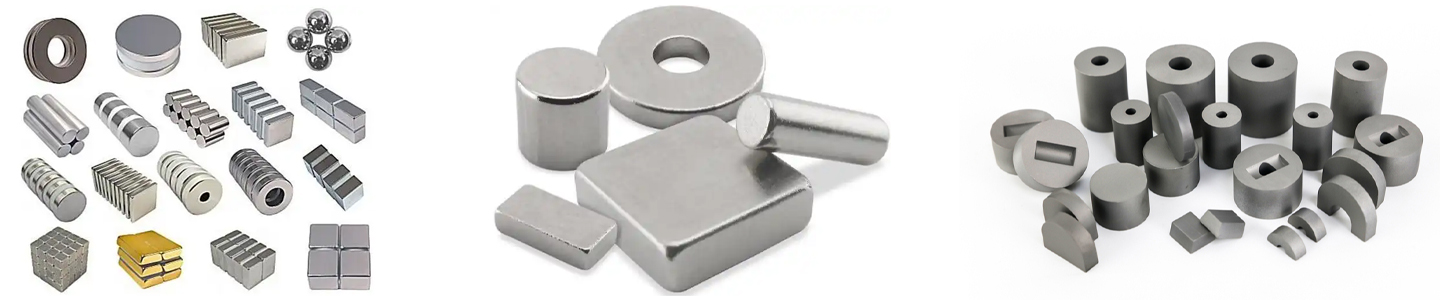
Simply Put, A Permanent Magnet Is A Magnet With Inherent Magnetic Force. This Force Is Inherent (After Magnetization) And Can Be Maintained For A Long Time. It Can Attract Iron Or Affect Other Magnets Without The Need For Electricity. It Is One Of The Key Building Blocks Of Modern Technology.
Machining Permanent Magnets (Especially High-Performance Rare Earth Permanent Magnets Such As NdFeB, SmCo, Etc.) Usually Requires A Grinding Process, Which Is A Key Step To Achieve Precise Dimensions And Surface Quality.
Key Points of the Grinding Process
1.Processing Methods
*Surface Grinding: Used for machining parallel planes of magnets (such as square and disc magnets) using a diamond grinding wheel.
*External Cylindrical Grinding: Used for machining cylindrical magnets (such as motor rotor rings).
*Internal Cylindrical Grinding: Used for machining holes and slots in magnets (such as multi-pole magnetized ring magnets).
2.Cooling and Demagnetization Prevention
*The high temperatures generated during grinding may cause demagnetization of the magnets (the Curie temperature of NdFeB is only 310-400°C), requiring forced cooling with a water-based coolant.
*The magnetization direction must be controlled during machining to avoid strong vibrations that could disrupt the magnetic domains.
3.Dust Control
*Permanent magnet powder is flammable (NdFeB contains iron), requiring an explosion-proof dust removal system.
Abrasive tools: Remove material through physical contact, requiring a balance between efficiency and anti-demagnetization design.
1.Diamond Grinding Wheel
*Core Advantage: Diamond hardness (Mohs 10) enables efficient cutting of permanent magnets (NdFeB hardness approximately HRC60).
2.Type Subdivisions:
*Resin-bonded Grinding Wheel: Excellent elasticity, suitable for fine grinding (grit size 80#-150#), with surface roughness up to Ra 0.8μm, such as in double-face grinding machines for NdFeB discs (φ5-14mm).
*Metal-bonded Grinding Wheel: Highly wear-resistant, suitable for coarse grinding, but prone to heat generation and requiring coolant.
3.Typical Equipment:
Double-face grinding machines (such as the M7625) utilize a φ250mm diamond grinding wheel, dual grinding heads for simultaneous machining, and parallelism control within ±0.01mm, resulting in 50% higher efficiency than single-face grinding.
Magnetic Fluid Lapping
1.Technical Highlights: Magnetic particles (such as Fe₃O₄) carry non-magnetic abrasive (diamond powder) and flow in a magnetic field, achieving seamless polishing.
2.Advantages: It can process complex structures such as deep holes and threads without mechanical stress damage.
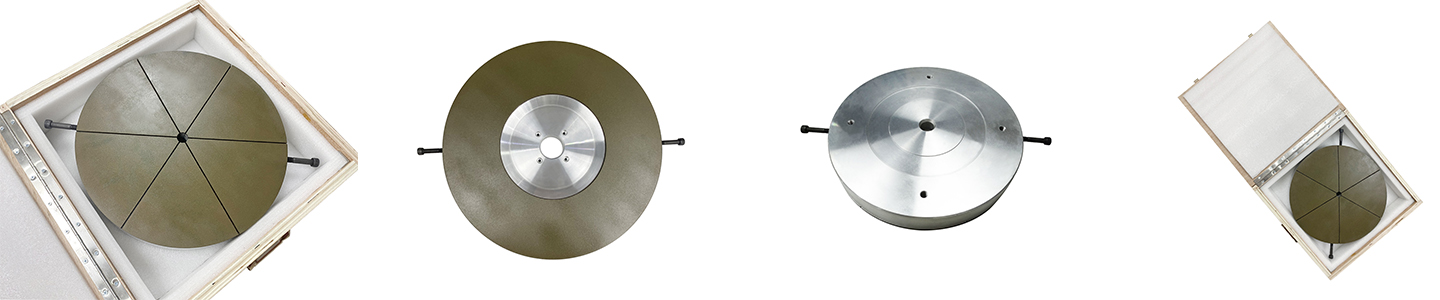
The Diamond Grinding Wheels We Produce Have Extensive Experience In The Field Of Grinding Permanent Magnets. We Have Gained The Trust Of Permanent Magnet Companies In China, The Philippines And Other Countries In The Production Of End Face Diamond Grinding Wheels.If Your Company Needs Related Grinding Wheels And Technical Support, Please Contact Us For Consultation:admin@qediamonds.com
