
Rolling Mill Is An Indispensable Key Tool Component In The Metal Rolling Industry. It Uses Enormous Pressure To Cause Plastic Deformation Of The Metal, Thereby Producing Various Steel And Non-Ferrous Metal Materials That We See In Our Daily Lives. Its Design, Materials, And Manufacturing Process Are Directly Related To The Quality, Production Efficiency, And Cost Of Rolled Products, And Are A Concentrated Reflection Of The Technological Level Of The Metallurgical Industry.
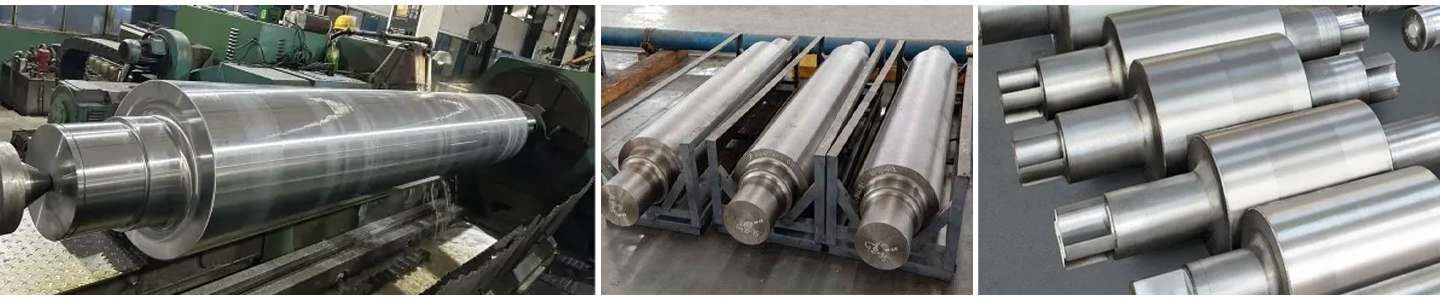
Grinding Is The Most Common And Frequent Operation In Roll Maintenance, Usually Completed By Specialized Roll Grinders.
01 Purpose:
Repair Surface Defects: After A Period Of Use, The Working Surface Of The Rolling Mill Will Produce Small Cracks, Pits, Oxide Film Peeling Or Surface Roughness Increase Due To Wear And Fatigue. Grinding Can Remove These Damaged Surfaces And Restore Their Smooth And Intact Appearance.
Restoring Precise Size And Shape: When The Rolling Mill Works Under Immense Pressure, Slight Bending Or Wear May Occur, Resulting In A Decrease In Geometric Accuracy Such As Cylindricity And Convexity. Grinding Can Reprocess It To The Precise Size And Shape Required By The Design (Such As The Correct Roller Profile Curve).
Preparing For The Next Rolling: Sometimes, In Order To Produce Products With Different Surface Requirements (Such As Glossy Or Frosted Panels), It Is Necessary To Specially Grind Specific Surface Textures On The Rollers.
02 Process:
The Grinding Process Is Similar To Giving A “Precision Beauty” To A Rolling Mill. It Uses A High-Speed Rotating Grinding Wheel To Grind The Surface Of A Slowly Rotating Rolling Mill Under Constant Pressure, Removing A Small Amount Of Material And Achieving Extremely High Dimensional Accuracy And Surface Smoothness.
03 Importance:
Regular Grinding Is The Key To Ensuring The Quality Of Rolled Products (Such As Uniform Thickness And Smooth Surface) And Extending The Service Life Of The Rolling Mill Itself. A Rolling Mill Will Undergo Multiple Grindings Throughout Its Entire Lifecycle Until Its Diameter Decreases To The Scrap Standard.
04 How To Choose Grinding Wheel When Grinding Different Rollers?
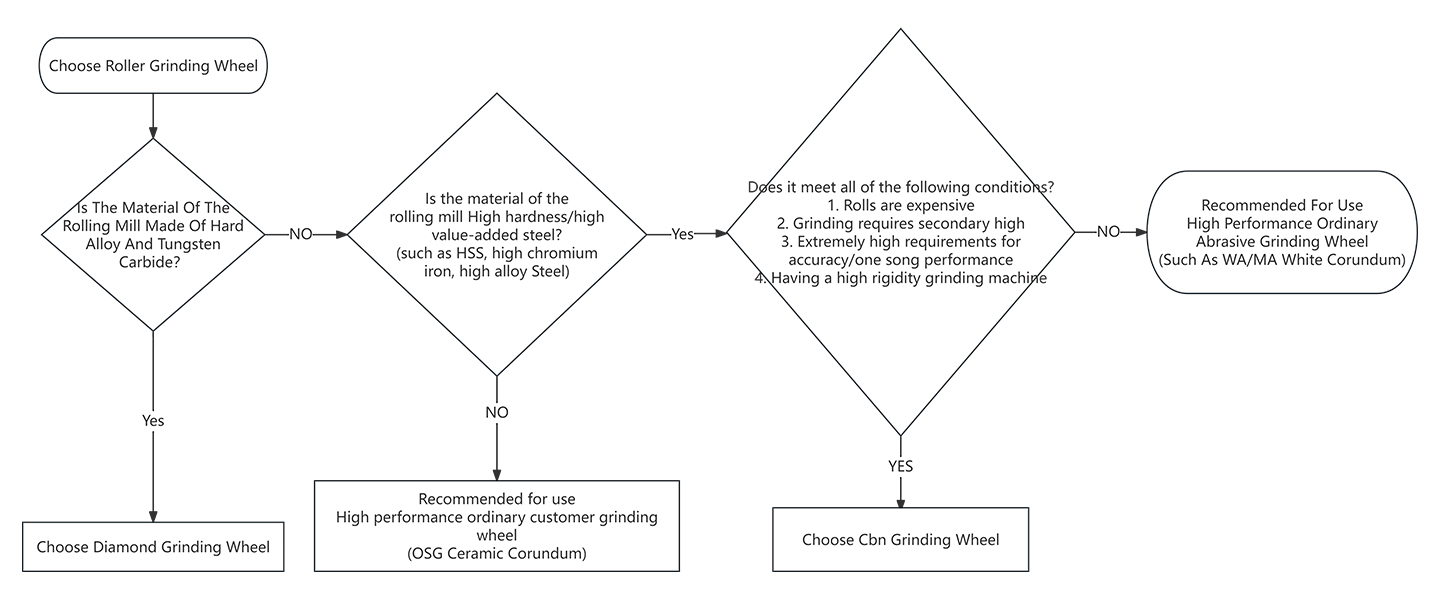
(1) Based On The Material Of The Grinding Roller:
Diamond Grinding Wheel: When The Roller Material Is Extremely Hard Materials Such As Tungsten Carbide (WC), Ceramics, Or Other Metal Ceramics.
Cbn Grinding Wheel:The Material Of The Rolling Mill Is High Hardness And High Wear Resistance Steel Material, Such As High-Speed Steel (HSS) Rolling Mill, High Chromium Iron (Hi Cr Iron) Rolling Mill, High Chromium Steel (Hi Cr Steel) Rolling Mill, And High Alloy Forged Steel Rolling Mill;
Al₂O₃, SiC, SG Grinding Wheel:The Vast Majority Of Ordinary Cast Iron, Cast Steel, And Low-Alloy Forged Steel Rolling Rolls Have Relatively Low Hardness (Such As Below HRC 60);
05 Important Conclusions And Recommendations
Never Confuse: It Is Strictly Prohibited To Try Using CBN Or Diamond Grinding Wheels On Old Grinding Machines With Low Rigidity And Low Precision. This Is Not Only A Waste, But Also May Lead To Quality Accidents Such As Grinding Vibration, Roller Burns, And Even Damage To Equipment.
Upgrade Path: If A Factory Wants To Introduce CBN Grinding Technology, It Often Means Investing In Purchasing New High-End Grinding Machines, Rather Than Just Replacing The Grinding Wheel.
Economic Choice: For The Vast Majority Of Enterprises, Upgrading The Performance Of Ordinary Grinding Wheels (Such As Upgrading From Ordinary Corundum To SG Ceramic Corundum) And Using Them On Existing CNC Grinding Machines Is The Most Economical And Practical Path To Improve Grinding Efficiency And Effectiveness.
Expert Consultation: Before Making A Decision, It Is Important To Invite Technical Engineers From Both The Grinding Wheel Supplier And The Grinding Machine Manufacturer To Jointly Evaluate Whether Your Equipment Has The Potential To Use Superabrasive Grinding Wheels.
06 How To Choose A Binder For Grinding Rolls With Superhard Abrasive (Diamond/CBN) Grinding Wheels?
1. Vitrified Bond (V)
This Is Currently The Most Widely Used And Well-Balanced Bonding Agent For CBN Grinding Wheels In Roll Grinding.
Features:
(1)High Grinding Efficiency: The Bonding Agent Has Many Pores, A Large Chip Holding Space, Good Chip Removal And Cooling Effects, And Is Not Easily Blocked.
(2)Easy To Trim: Traditional Diamond Trimming Rollers Can Be Used For Trimming And Sharpening, Which Is Very Convenient And Cost-Effective.
(3)Maintaining Shape: With High Rigidity, It Can Effectively Maintain The Geometric Shape And Accuracy Of The Grinding Wheel, Making It Very Suitable For Grinding Complex Roller Profiles (Such As CVC, PC).
(4)Good Heat Resistance: Its Heat Resistance And Chemical Stability Are Superior To Resin Binders.
Application Scenario:
(1)The Vast Majority Of CBN Grinding Wheels Are Used For Grinding Steel Rollers, Especially For High-Speed, Efficient, And Heavy-Duty Rough And Fine Grinding.
(2)In Situations Where High-Precision And Complex Profile Grinding Is Required.
(3)It Is The Absolute Mainstream Choice For High-Performance Rolling Mill (HSS, High Chromium Iron) Grinding.
2. Resin Bond (B)
Features:
(1)Good Polishing Performance: With Appropriate Elasticity, It Can Produce A “Polishing” Effect On The Workpiece, Thereby Achieving Extremely High Surface Smoothness (Low Ra Value).
(2)Good Self Sharpening: After The Abrasive Particles Are Passivated, They Are Easily Detached From The Binder, Exposing New Sharp Abrasive Particles, And The Cutting Performance Is Stable.
(3)Good Vibration Resistance: It Has A Certain Degree Of Elasticity And Can Absorb Some Grinding Vibrations.
Application Scenario:
(1)Mainly Used For Ultra Precision Grinding And Polishing Of Rolling Mills, Pursuing Ultimate Surface Quality.
(2)Commonly Used For Dry Grinding Or Grinding With Certain Special Requirements.
(3)In Diamond Grinding Wheels, They Are Commonly Used For Grinding And Polishing Hard Alloys.
3. Metal Bond (M)
Features:
(1)Excellent Wear Resistance: The Bonding Agent Itself Has Extremely High Strength And The Strongest Ability To Hold Abrasives, Resulting In The Longest Lifespan.
(2)Excellent Shape Retention: Almost No Wear And Tear, Able To Maintain The Initial Shape To The Maximum Extent Possible.
Application Scenario:
(1)Mainly Used For Diamond Grinding Wheels For Deep And Slow Feed Grinding Of Hard And Brittle Materials Such As Glass, Ceramics, And Tungsten Carbide.
(2)It Is Rarely Used In The Field Of Roller Grinding Because Its Difficult Dressing And Burn Prone Characteristics Contradict The Requirements Of Roller Grinding.
07 Core Principle:
Always Maintain Close Communication With The Technical Representative Of Your Grinding Wheel Supplier. We Can Provide The Most Suitable Binder And Abrasive Formula Based On Your Specific Requirements For Grinding Machines, Coolant, Roll Materials, And Processes.
